
Decades of personal history
Living in Japan: What Nobody Tells You
The last time I left Japan, I had no idea it would take me 35 years to return.
Japan had already been part of my life several times before I turned 20. I attended school there, lived with local families, travelled from Tokyo to Hokkaido, and later returned to teach English at a Kumon centre in Sendai.
Then life happened.
When I finally returned in 2026, I expected Japan to feel different. What I did not expect was how quickly it would feel familiar again.
Visiting Japan is extraordinary. Living there, however, introduces you to an entirely different country. Beyond the temples, bullet trains and convenience stores is a place filled with unspoken rules, tiny daily efficiencies, cultural contradictions and moments that can leave you wondering whether you understand anything at all.
Here is what nobody tells you.
Japan Was One of the First Countries I Called Home
Most people first experience Japan as an adult with a carefully organized itinerary, a suitcase full of sensible shoes and approximately 47 browser tabs explaining how the trains work.
That was not my introduction to Japan.
I first arrived as a teenager, when I was still figuring out who I was and had no idea how much the experience would shape the person I would become. Before I turned 20, I had travelled to Japan five times for educational experiences, attended school, lived within the culture and later taught English at a Kumon centre in Sendai.
I was fortunate enough to experience far more than a quick tour of Tokyo. My travels took me from Japan’s enormous capital to the northern island of Hokkaido, with plenty of lessons, wrong turns and unforgettable moments in between.
Japan taught me independence before I fully understood what independence meant. It taught me to observe before reacting, to listen even when I could not understand every word and to recognize that my way of doing something was not necessarily the only way.
It also taught me that being young and slightly clueless can be surprisingly useful. When you do not know enough to be afraid, you sometimes walk directly into the experiences that change your life.
Visiting Japan can feel almost magical.
Visiting Japan and Living in Japan Are Very Different Experiences
The trains arrive when they are supposed to. The food looks like someone arranged it with tweezers. Public spaces are remarkably clean, convenience stores are genuinely convenient and even the vending machines seem more competent than some people I have worked with.
Living in Japan is different.
When you live somewhere, the beautiful temples and famous landmarks become part of the landscape surrounding ordinary life. You still have to buy groceries, do laundry, navigate transportation, understand household products and figure out what everyone around you seems to know instinctively.
Eventually, every glamorous international adventure includes a moment when you are standing beneath fluorescent lights trying to determine whether the bottle in your hand contains laundry detergent, fabric softener or something capable of stripping paint from a barn.
That is when a destination becomes real.
Living in Japan gave me the opportunity to move beyond admiring the country and begin adapting to it. I learned by watching what other people did, listening carefully and accepting that I would sometimes get things completely wrong.
And I did.
More than once.
Nobody Hands You the Rulebook
Everything makes sense once you know what you’re supposed to know
Japan is often praised for its order, efficiency and etiquette. What nobody tells you is that much of that order depends on people understanding rules that may never be directly explained.
There are expectations around shoes, slippers, bathing, garbage, gift-giving, eating, speaking, queuing, visiting someone’s home and behaving on public transportation. Some rules are obvious. Others become apparent only after you notice you are the only person in the room doing something differently.
Nobody meets you at the airport and hands you a copy of The Complete Guide to Everything You Are About to Do Wrong.
You learn through observation.
You notice that conversations on crowded trains are generally quiet. You notice how people form orderly lines without being directed. You notice when shoes are removed, where slippers are worn and, equally important, where those slippers should absolutely not be worn.
Sometimes you learn because someone kindly explains the custom.
Sometimes you learn because several people suddenly look at your feet.
Living in Japan made me far more attentive to the small signals people exchange without speaking. It taught me that communication is not limited to vocabulary. A pause, a gesture or the particular way something is phrased can carry far more meaning than the words themselves.
Kindness and Belonging Are Not Always the Same Thing
Feeling welcomed does not mean understanding exactly where you fit
One of the things I remember most about Japan is the kindness people showed me.
People helped me navigate unfamiliar situations, welcomed me into their routines and gave me opportunities to experience daily life from the inside rather than simply observing it. Those connections became some of the most meaningful parts of my time there.
But being welcomed into a culture and fully understanding your place within it are not necessarily the same experience.
There were times when I felt completely included and others when I was keenly aware that I did not understand all the expectations surrounding me. That did not necessarily mean I was unwelcome. Often, it simply meant I was still learning.
Japan taught me to become comfortable with not always knowing exactly where I fit.
That lesson followed me into every other country I eventually called home. Moving abroad is not just about learning where things are or how systems work. It is also about accepting that adapting takes time and that belonging may look different from one place to another.
Japan Is Incredibly Convenient, Until It Suddenly Isn’t
Japan has mastered countless small conveniences.
Public transportation can move an astonishing number of people with impressive precision. Convenience stores sell everything from practical necessities to meals that can rescue a tired traveller at the end of a very long day. Vending machines seem to appear exactly when needed, and everyday objects are often designed with thoughtful details you did not realize were missing from your life.
Then you encounter something that feels unusually complex.
You may be faced with a form, a ticket machine, an unfamiliar administrative process or a system requiring several steps that make perfect sense to everyone except you. Modern technology and long-established procedures can exist comfortably beside one another, sometimes within the same building.
That contrast is part of what makes Japan so fascinating.
It can feel decades ahead of the rest of the world in one moment and charmingly committed to a very specific process in the next.
My recent trip made that contrast especially noticeable. The Japan I knew as a teenager existed before smartphones, translation apps, digital tickets and instant access to directions. Travelling then required a greater willingness to be lost.
And I was occasionally very willing.
Returning with modern technology made some things dramatically easier, but Japan still reminded me that even the best app cannot replace patience, observation and the ability to laugh when a plan falls apart.
Understanding the Words Is Only Part of the Conversation
A translation app cannot translate context
Learning enough Japanese to navigate a conversation is incredibly helpful, but language is about far more than replacing one word with another.
Communication in Japan can depend heavily on context, tone, relationships and what remains unsaid. A response that sounds uncertain may be a polite refusal. A pause may be meaningful. A phrase may technically translate one way while communicating something slightly different.
As a teenager, I learned that confidence could carry me surprisingly far, especially when combined with observation, gestures and a sincere willingness to look ridiculous.
Perfection was never required.
Effort mattered.
Even a few words could change an interaction. Trying to communicate showed respect and often opened the door to kindness, patience and occasionally a shared laugh over whatever I had just said incorrectly.
Daily Life Is Not a Permanent Vacation
Eventually, you still have laundry
When people imagine living in Japan, they often picture temple visits, cherry blossoms, beautifully arranged meals and sleek trains passing Mount Fuji.
Those moments exist, and they are wonderful.
But living anywhere eventually becomes ordinary.
You develop routines. You commute. You buy groceries. You deal with weather. You look for something you cannot find. You miss foods from home that you rarely thought about until they disappeared from your life.
There can also be loneliness, frustration and cultural fatigue. Even exciting experiences require energy when every simple task demands extra concentration.
A quick errand can become an expedition when you cannot read the packaging. A familiar process can have unfamiliar steps. Something that would take five minutes at home may consume an entire afternoon.
Then, gradually, the unfamiliar becomes routine.
You stop thinking about which side to stand on. You begin recognizing the products in the store. You develop favourite places. You learn your route. The sounds that once seemed foreign become part of the background.
That is the point when living abroad begins to feel less like an extended trip and more like life.
Tokyo Is Not Japan
One country, countless different experiences
Tokyo is extraordinary, but Tokyo is not the whole story.
Japan changes dramatically from one region to another. The pace, landscape, climate, food and daily rhythm can all feel different depending on where you are.
My experiences took me from Tokyo to Sendai and as far north as Hokkaido. More recently, I returned to explore both familiar and new places, including lively cities, temple towns, pottery communities and quieter areas that felt worlds away from Tokyo’s bright lights and enormous crowds.
Each offered a different version of Japan.
Tokyo can feel wonderfully overwhelming, a city that operates on a scale that is difficult to understand until you stand in the middle of it. Sendai holds a different place in my memory because it became connected to work and everyday life. Hokkaido offered another perspective entirely, with its vast landscapes, distinctive climate and distance from the image of Japan many first-time visitors carry with them.
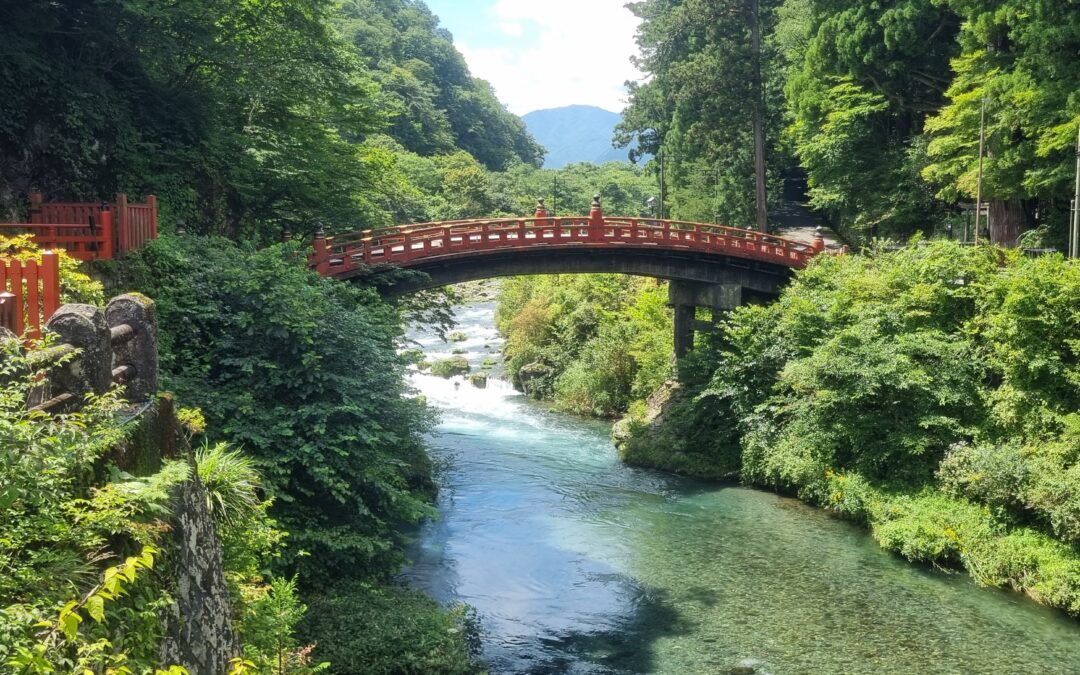
On my recent return, places such as Nikko, Mashiko, Nagoya, Kyoto and Nara added even more layers to the story.
Claiming to understand Japan after visiting only Tokyo would be a little like claiming to understand Canada after spending four days in Toronto.
Japan is not a single experience. It is a collection of regions, communities and rhythms, each deserving time and attention.
Returning After 35 Years
The Japan I remembered & the Japan I found
The last time I had been in Japan was 1995.
Then, in 2026, I finally returned.
Thirty-five years is long enough for a country to change. It is also long enough for a person to change completely.
I was no longer the teenager arriving with youthful confidence, limited life experience and no smartphone to rescue me when I wandered in the wrong direction. I returned with decades of travel behind me, a much greater appreciation for logistics and considerably stronger opinions about comfortable footwear.
I expected Japan to look different.
I did not expect it to feel familiar so quickly.
Certain sights, sounds and small rituals seemed to unlock memories I had not actively revisited in years. Sometimes it was the rhythm of a train station. Sometimes it was a familiar flavour, a phrase or a tiny detail that transported me back to a much younger version of myself.
What had changed
Technology had transformed how I experienced the country.
During my earlier trips, there were no translation apps quietly waiting in my pocket. Navigation required maps, directions, observation and a willingness to ask for help. Staying in contact was not instant, and every missed turn came with a little more adventure.
On my return, my phone became a map, translator, train planner, camera and emergency problem solver. Some of the challenges that had defined international travel in my teenage years had almost disappeared.
Tourism had also changed the experience in many places. Destinations that had once felt relatively quiet were now internationally famous. Information was easier to access, but certain locations were also far busier than I remembered.
What had stayed the same
The attention to detail still stood out.
The rhythm of public transportation felt familiar. The hospitality remained meaningful. The care placed into food, presentation and ordinary interactions still made daily life feel distinctive.
Most importantly, the connection I felt to Japan had not disappeared.
The country had changed. I had changed. Yet somehow, a thread remained between the teenager who first arrived and the adult who finally returned.
Meaningful places can still be complicated
Loving Japan Does Not Mean Pretending It Is Perfect
It is easy to romanticize a country, especially one connected to important memories.
Japan is safe, fascinating, organized and incredibly rewarding to explore. It can also be challenging.
Language barriers can be exhausting. Social expectations may be difficult to understand. Crowded transportation, humid weather, unfamiliar systems and the pressure of constantly interpreting your surroundings can wear you down.
Living abroad can also be lonely, even when people are kind.
There is a difference between admiring a culture and understanding how to build a sustainable life within it. A place that feels exhilarating during a visit may present very different challenges when assignments, work, bills and responsibilities become part of the experience.
That does not diminish my love for Japan.
If anything, recognizing the difficult parts makes that love more honest.
No country is perfect. Every place offers a combination of beauty, frustration, comfort and contradiction. The point is not to find somewhere with no problems. It is to understand which challenges you can live with and which parts of a place make those challenges worthwhile.
Would I Live in Japan Again?
The short answer is yes, but not exactly as I did before
Japan will always hold a special place in my life.
Would I live there again? Yes, under the right circumstances.
I would return with more patience, better language skills and a clearer understanding of what I need to feel at home. I would also want time to experience ordinary life again rather than rushing between attractions as a visitor.
At this stage of my life, I am especially drawn to the possibility of living beyond Japan’s largest cities. Rural communities, smaller cities and homes outside crowded urban centres offer a different kind of appeal. They also come with important practical considerations, including transportation, services, language and community integration.
Japan is not somewhere I would move simply because I loved travelling there.
It is somewhere I would consider because it has already taught me what it means to adapt, to observe and to build a life in a culture different from my own.
That does not make the decision simple.
It makes it meaningful.
What I Wish More People Knew Before Living in Japan
Japan rewards curiosity, but it also rewards humility.
You do not need to understand everything before arriving. You do need to accept that you will make mistakes.
You will misunderstand something.
You will take the wrong exit from an enormous train station and emerge in what appears to be another postal code.
You may order something without being entirely sure what it is.
You may break an unspoken rule, confuse a household product or say something that produces a very polite but unmistakably puzzled response.
That is okay.
The goal is not to move through another country without ever looking foolish. The goal is to pay attention, respond respectfully and learn.
The people who have the richest experiences abroad are rarely the ones who arrive believing they already understand everything. They are the ones willing to be surprised.
Why It’s Worth It
Japan taught me independence before I fully understood what independence meant.
It introduced me to new ways of communicating, learning, travelling and building relationships. It challenged my assumptions and helped shape the curiosity that eventually carried me to other countries around the world.
Returning after 35 years did not feel like repeating an old trip.
It felt like meeting someone important after decades apart.
We had both changed. Some things were almost unrecognizable, while others felt so familiar that the years between visits seemed to disappear.
Living in Japan was not always easy. Returning was not entirely nostalgic. But both experiences reminded me that the places that shape us do not simply disappear when we leave.
Japan was one of the first countries I called home.
And yes, it was absolutely worth it. 
Please note that I have not received these products for free or at a discounted price in exchange for my opinion. There may be links that are affiliate links but at the time of posting this review, I have not received any monetary kickbacks.