
Wait… What Was That?
The Kind of Place That Makes Me Turn Around
There are places you carefully research before a trip.
You read reviews. Save them to Google Maps. Plan your route.
And then there are places you spot from the highway and think:
Wait… what was THAT?
Whippletree Junction falls firmly into the second category.
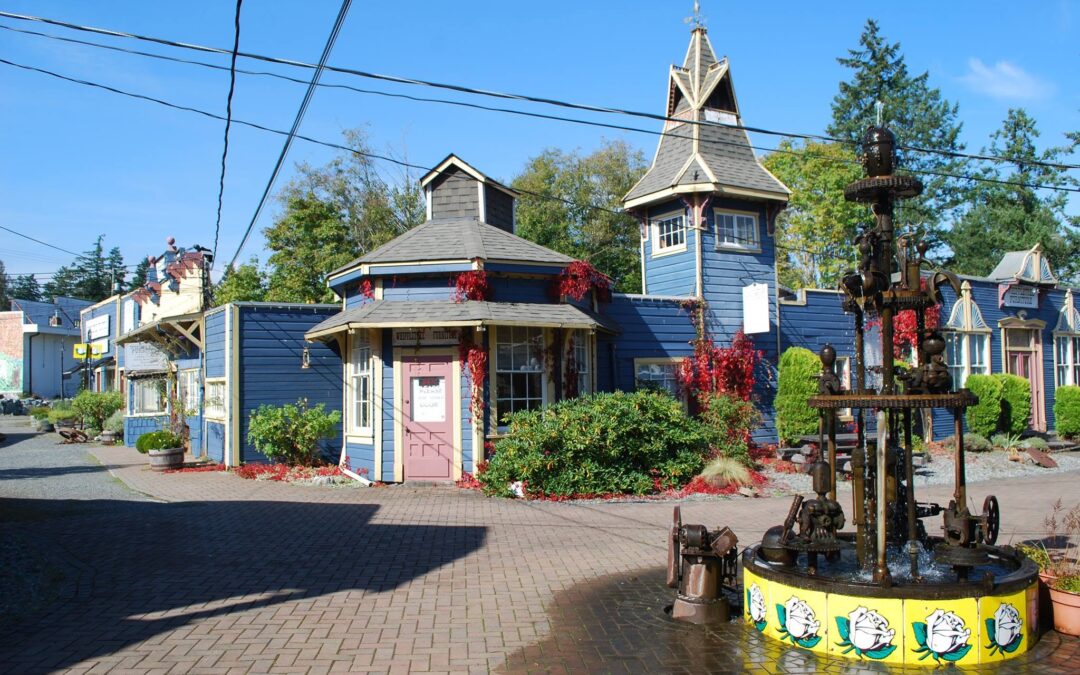
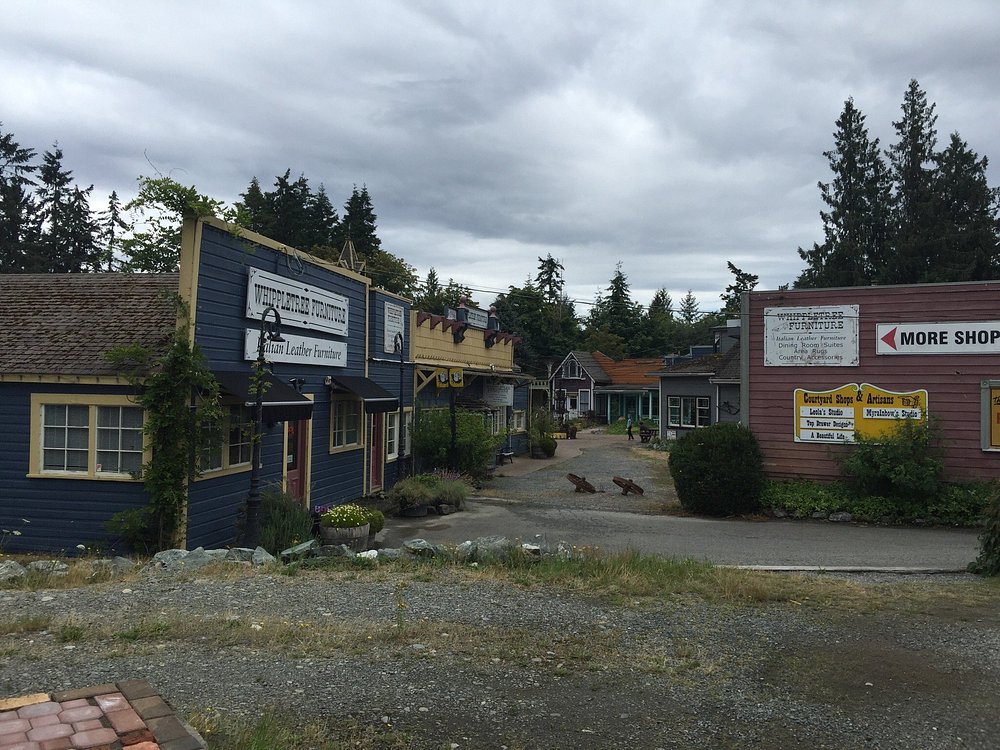
Sitting along the Trans-Canada Highway just south of Duncan, it’s an eclectic collection of old buildings filled with shops, galleries and businesses.
From the road, it doesn’t look like a conventional shopping centre.
Which, naturally, makes me want to stop even more.
Definitely Not Your Average Shopping Centre
A Little Bit of Everything
Part of the fun of Whippletree Junction is simply wandering around.
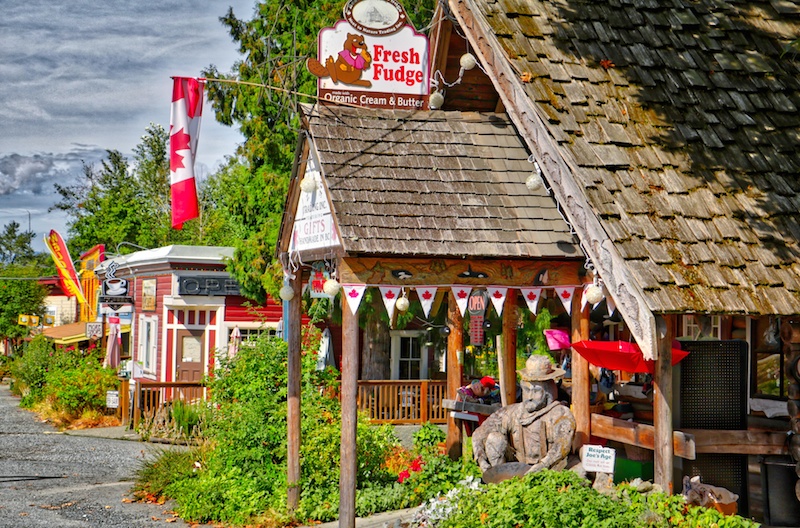
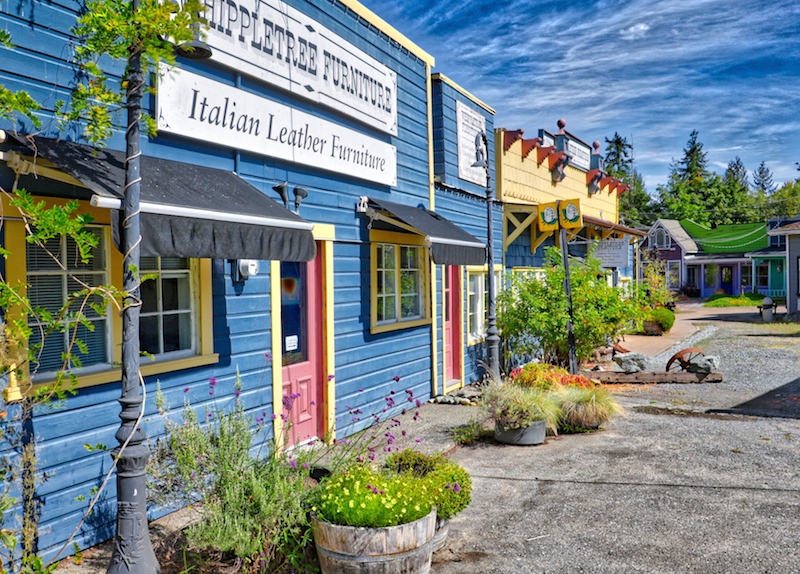
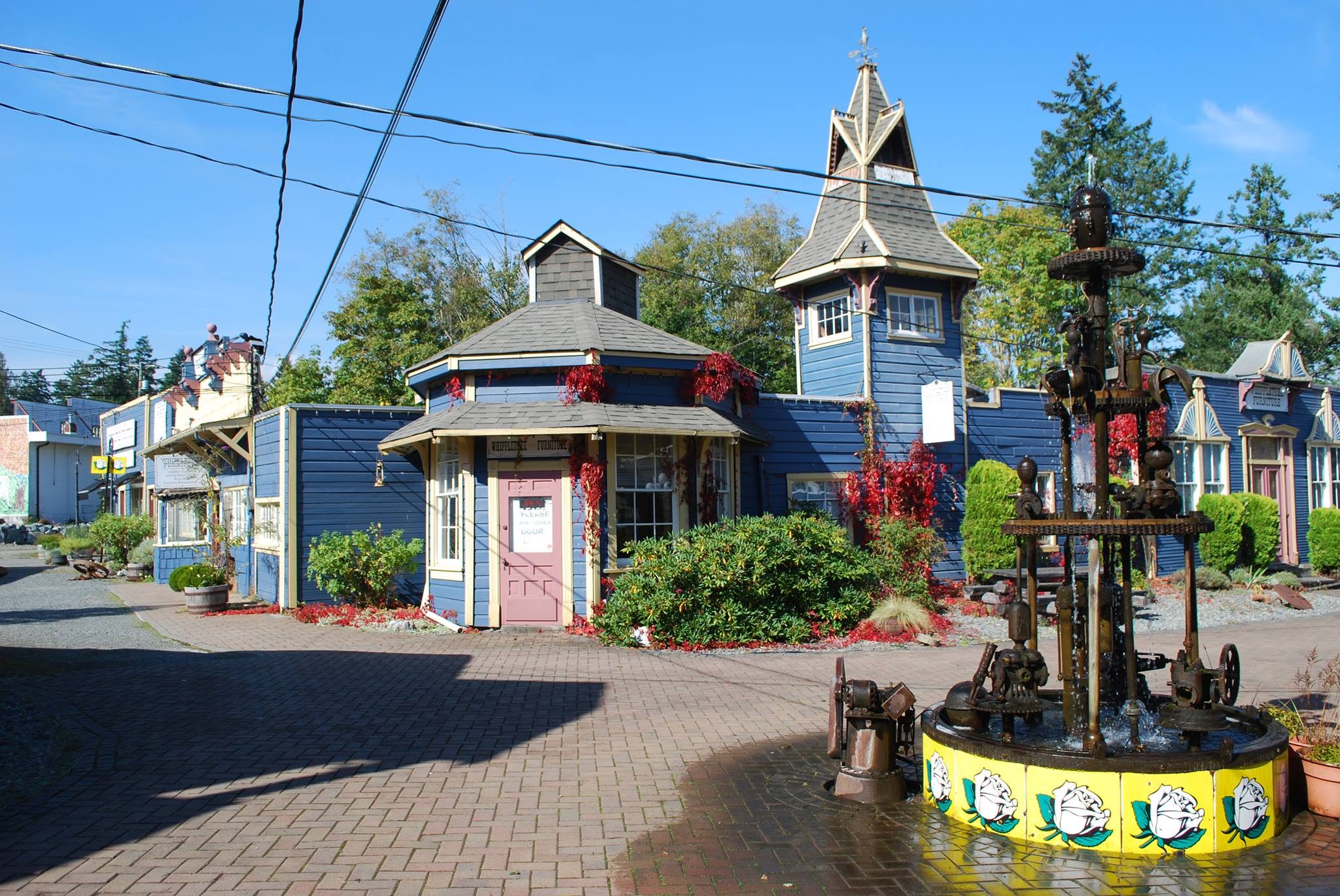
Old-fashioned storefronts sit beside log buildings. A cobbled courtyard leads you between businesses. There are shops, galleries and other little discoveries tucked throughout the property.
It feels less like arriving at a carefully planned attraction and more like stumbling into a collection of things accumulated over generations.
And there’s a reason for that.
Because the buildings themselves are part of the story.
There’s History Hiding Here
Built From Pieces of Vancouver Island’s Past
Whippletree Junction began taking shape in 1969, after Randy Streit had been contracted to demolish Duncan’s old Chinatown the previous year.
But there’s an important distinction to make.
You may hear the story that the old Chinatown buildings were simply picked up and moved to Whippletree Junction.
That’s not quite what happened.
Historical reporting from The Discourse found that Randy Streit recycled some of the lumber from the demolished Chinatown buildings and used it to construct his first shops at the Junction.
That history is bittersweet.
Duncan once had a thriving Chinatown. By the late 1960s, the city had purchased the buildings for demolition, despite efforts from the Chinese community to preserve that history.
So while Whippletree Junction holds a physical piece of Duncan’s Chinese history, it’s also a reminder of a much bigger story that shouldn’t be reduced to a quirky collection of old buildings.
And knowing that made the place considerably more interesting to me.
Apparently One Old Building Wasn’t Enough
The Collection Kept Growing
Over the years, more salvaged buildings were added to Whippletree Junction, including structures saved from demolition in Sooke and Cobble Hill.
That’s probably why wandering around feels so unusual.
Nothing quite matches.
And that’s the charm.
Instead of tearing down something old and replacing it with another anonymous building, pieces of Vancouver Island’s past ended up having another life here.
It’s wonderfully mismatched.
A little strange.
And completely unlike stopping at a modern shopping plaza.
My Favourite Kind of Detour
You Never Know What You’ll Find
This is one of those places where the point isn’t necessarily checking something specific off a list.
The wandering is the attraction.
Peek inside the shops.
Walk around the old buildings.
Notice the little architectural details.
Take photographs.
Wonder where everything came from.
It’s exactly the kind of stop I love incorporating into a road trip because you don’t need half a day or an elaborate itinerary to enjoy it.
Sometimes you simply see something interesting and pull over.
Those stops have produced some of my favourite travel memories.
Slow Down Through the Cowichan Valley
Make It Part of a Bigger Day
What I particularly like about Whippletree Junction is how easily it fits into a day exploring the Cowichan Valley.
It doesn’t have to be your destination.
It can simply be one of the interesting things you discover between destinations.
And considering we’ve now found totem poles, wineries, a cheese vending machine and Whippletree Junction in this part of Vancouver Island, I’m starting to think our Cowichan Valley road-trip itinerary is writing itself.
This region rewards wandering.
Why It’s Worth It
Stop for the Story
If you’re expecting some enormous tourist attraction, Whippletree Junction probably isn’t it.
That’s precisely why I like places like this. It’s quirky. It’s historic. It’s local.
And it has a story you wouldn’t necessarily discover unless you stopped and looked a little closer.
You can wander through, browse the shops, photograph the old buildings and then continue exploring the Cowichan Valley.
No elaborate plan required. Just don’t make the mistake of driving past because it looks a little strange from the highway.
The strange places are usually where the good stories are. And those?
They’re almost always worth it.
Please note that I have not received these products for free or at a discounted price in exchange for my opinion. There may be links that are affiliate links but at the time of posting this review, I have not received any monetary kickbacks.