
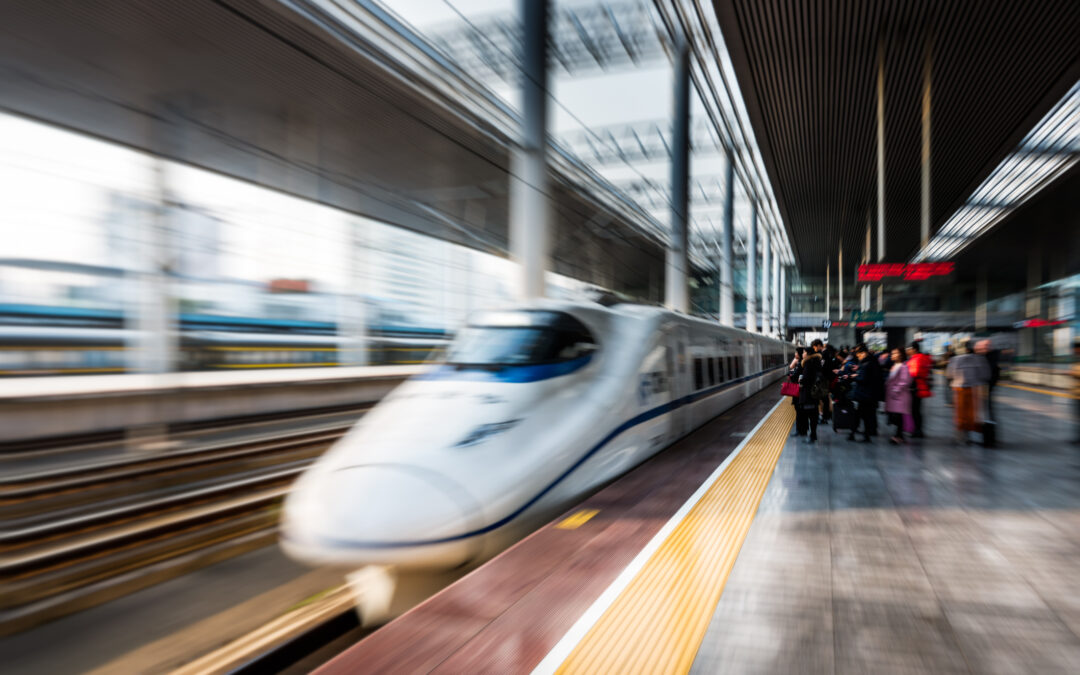
Japan’s Bullet Trains Are Even Better Than You’ve Heard
Speed, Comfort, and a Little Bit of Magic
The first time I rode the Shinkansen, I expected a fast train.
What I didn’t expect was how effortless the entire experience would feel.
The Tokaido Shinkansen connects major cities like Tokyo, Kyoto, Nagoya, and Osaka, while other Shinkansen lines connect travelers to destinations throughout Japan. Tokyo Station serves as one of the primary gateways to many of these routes.
Depending on the train type, Shinkansen trains can reach speeds of up to approximately 285 to 320 km/h (177 to 199 mph), making them one of the fastest ways to travel around the country.
And somehow, while traveling at speeds that would make most highways blush, the ride remains remarkably smooth.
You can sip coffee, enjoy an ekiben lunch, look out the window, and before you know it, you’re arriving in another city.
Choosing Between Ordinary Class and Green Car
Is the Upgrade Worth It?
Most travelers ride in Ordinary Class, and it’s already more comfortable than many airlines.
The seats are spacious, clean, and recline comfortably.
But if you’d like a little extra room and a quieter environment, consider booking a Green Car.
Think of the Green Car as Japan’s version of first class train travel.
Benefits include:
- Wider seats
- More legroom
- Less crowded carriages
- Quieter atmosphere
- More comfortable seating for longer journeys
For shorter trips, Ordinary Class is perfectly fine.
For longer journeys, especially if you’re traveling between Tokyo and Kyoto or Osaka, the Green Car can be a nice treat.
Personally, if you’re already spending thousands on an international trip, the upgrade may be worth considering for at least one segment of your journey.
Do You Need an Oversized Luggage Reservation?
The Rule Many First-Time Visitors Miss
This is one of the most important things to know before boarding.
On certain Shinkansen services, particularly the Tokaido Shinkansen route between Tokyo, Kyoto, and Osaka, passengers traveling with oversized luggage may need to reserve designated luggage space.
If your suitcase exceeds the oversized luggage size limits established by the train operators, you’ll need to reserve the appropriate seating area.
The good news? Most standard carry-ons and medium-sized suitcases don’t qualify as oversized.
The bad news? Large checked luggage often does.
This is one reason I became a huge fan of Japan’s luggage forwarding service.
Not only did it eliminate the oversized luggage issue entirely, but it also meant I wasn’t dragging a giant suitcase through train stations, subways, and hotel lobbies.
In many cases, forwarding your luggage can be easier and surprisingly affordable compared to dealing with oversized baggage logistics yourself.
Booking Your Shinkansen Tickets Online
Easier Than Standing in Line
One of the biggest changes for travelers in recent years is the ability to reserve many Shinkansen tickets online.
Several booking platforms now allow visitors to:
- Reserve seats
- Select train times
- Purchase tickets in advance
- Make changes before departure
Not every train and route offers identical online booking options, however.
On the Tokaido Shinkansen, services such as the popular Nozomi trains often have more online reservation availability than some regional routes. Travelers should always verify booking availability for their specific route before finalizing travel plans.
Booking online can be especially useful during:
- Cherry blossom season
- Golden Week
- Obon
- New Year’s travel periods
These are some of the busiest travel times in Japan and trains can fill up quickly.
The Apps I Recommend for Booking in Advance
Don’t Wait Until the Last Minute
If you’re planning your trip before arriving in Japan, a few apps and websites can make life much easier.
SmartEX
This is one of the most popular options for booking tickets on the Tokaido Shinkansen route. I used it constantly throughout my trip.
Good for:
- Tokyo to Kyoto
- Kyoto to Osaka
- Nagoya to Tokyo
- Most first-time visitors
- JR Central and JR East Reservation Systems
Depending on your route, the regional JR reservation systems can also provide seat reservations and advance booking options.
Google Maps
Not technically a booking app, but absolutely essential.
Google Maps is surprisingly accurate for:
- Departure times
- Platform information
- Train connections
- Transfer guidance
Tips for First-Time Shinkansen Riders
Things I Wish I’d Known Before Boarding
Reserve Busy Routes Early
- Popular routes like Tokyo to Kyoto can become busy during peak travel seasons.
- If you already know your dates, book ahead.
Arrive Early
- Large stations like Tokyo Station are enormous.
- Give yourself at least 20 to 30 minutes before departure to find your platform, buy snacks, and get oriented.
Buy an Ekiben
- One of Japan’s great train traditions.
- An ekiben is a packaged train station meal, and they’re often surprisingly good.
- Some travelers look forward to the ekiben almost as much as the train itself.
Sit on the Correct Side for Mount Fuji
- Traveling from Tokyo toward Kyoto?
- Try to sit on the right-hand side of the train.
- On a clear day, you may be rewarded with spectacular views of Mount Fuji.
Consider Luggage Forwarding
- Seriously.
- If you’re carrying large suitcases, luggage forwarding may become your new best friend.
- Your back will thank you.
One of the Best Parts of the Journey
Beer, Snacks, and Watching Japan Fly By
One of my favourite parts of riding the Shinkansen wasn’t the speed.
It was settling into my seat, ordering a cold beer and snack that was brought to my seat within minutes, and watching the Japanese countryside blur past the window at nearly 300 km/h.
There is something wonderfully civilized about train travel in Japan.
Unlike air travel, you’re free to relax, stretch your legs, enjoy a meal, or toast the start of your vacation while racing across the country.
For years, many Shinkansen routes were famous for their onboard refreshment carts that sold drinks, snacks, coffee, and even beer directly at your seat. While onboard service has become more limited in recent years and varies by train, beverage and snack options may still be available on select services.
Even when there isn’t onboard service, every major station offers plenty of options before boarding.
My Recommendation: Before your train departs, stop by one of the station food shops and pick up an ekiben and a drink.
An ekiben (station bento box) is a Japanese travel tradition and comes packed with everything from sushi and grilled fish to beef, rice, vegetables, and regional specialties.
Suddenly, the train ride becomes part of the adventure instead of simply transportation.
The Window Seat Bonus
If you’re travelling from Tokyo toward Kyoto or Osaka, try to grab a window seat on the right side of the train.
On a clear day, you may catch spectacular views of Mount Fuji while enjoying your lunch and a drink.
Not a bad way to spend a couple of hours.
Why It’s Worth It
More Than Just Transportation
The Shinkansen isn’t simply a way to get from Point A to Point B.
It’s part of the Japan experience.
It’s the ability to enjoy breakfast in Tokyo, have lunch in Kyoto, and spend the afternoon exploring somewhere completely different.
It’s watching city skylines, rice fields, mountains, and small towns blur past your window at extraordinary speed.
And after your first ride, you’ll likely find yourself wondering the same thing I did:
Why can’t every country make train travel this easy?
Please note that I have not received these products for free or at a discounted price in exchange for my opinion. There may be links that are affiliate links but at the time of posting this review, I have not received any monetary kickbacks.