
Tokyo Station Is Bigger Than You Think
This Isn’t a Train Station. It’s a Small City.
Nothing truly prepares you for your first visit to Tokyo Station. Sure, you’ve seen photos. You’ve watched YouTube videos. You’ve looked at maps. Then you walk inside and immediately realize you’ve underestimated everything.
Tokyo Station first opened in 1914 and serves as one of Japan’s most important railway hubs. Today, more than 4,000 trains arrive and depart daily, and roughly half a million people pass through the station every day. This makes you feel like you are in a real life game of Frogger.
What surprised me most wasn’t the number of trains.
It was the fact that Tokyo Station contains entire shopping districts, restaurants, convenience stores, underground malls, hotels, and passageways that seem to stretch forever.
You don’t simply pass through Tokyo Station. You visit it.
Why Everyone Gets Lost
There Are More Exits Than You Can Count
The first thing to understand is that Tokyo Station isn’t one building.
It’s divided into two major sides:
Marunouchi Side (the beautiful historic red-brick side facing the Imperial Palace)
Yaesu Side (the modern side with shopping, buses, and many Shinkansen connections)
Sounds simple enough.
Except those sides are connected by an extensive network of underground passageways, shopping areas, train platforms, and exits.
At some point you’ll be convinced you’re heading in the correct direction.
Then you’ll emerge somewhere completely different.
The Secret to Surviving Tokyo Station
Stop Looking for Your Train and Start Looking for Your Exit
Focus on one thing at a time.
- If you’re leaving the station: Find your exit first.
- If you’re catching a train: Find your platform first.
- If you’re changing trains: Follow the signs and trust the process.
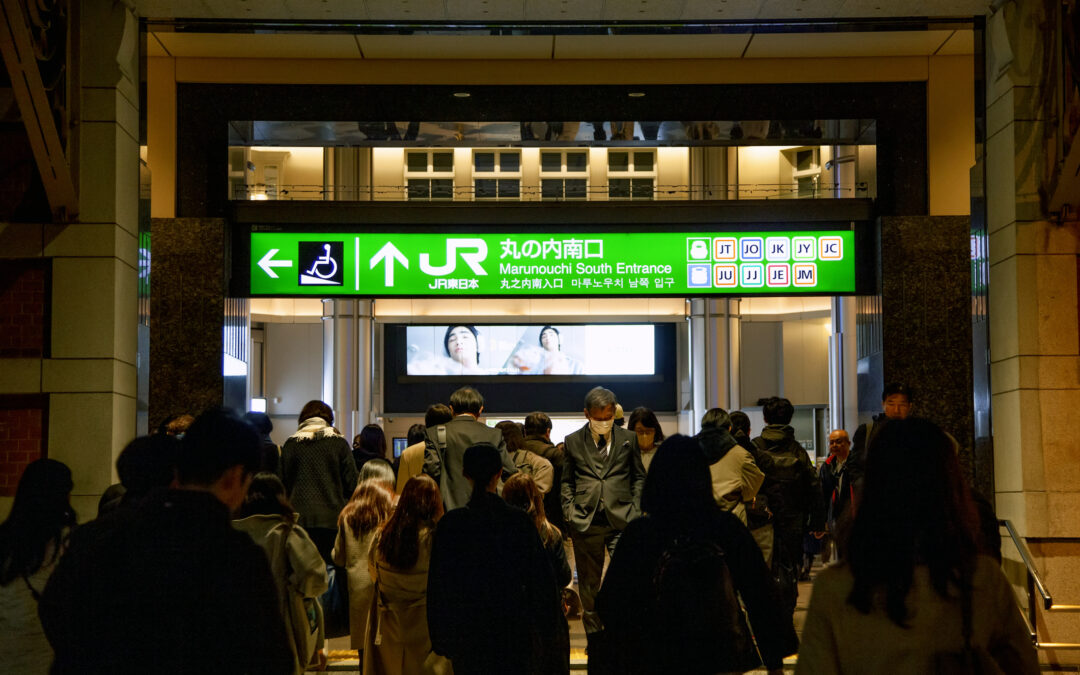
Japanese station signage is incredibly good. Signs are available in both Japanese and English, and nearly every major route is clearly marked.
The key lesson: Resist the urge to panic. The signs know where you’re going. Even when you don’t.
If you’re meeting someone, heading to a hotel, or following directions from Google Maps, always pay attention to which exit is mentioned. Not just “Tokyo Station.” The actual exit.
Use the Marunouchi Side If You’re Going To:
- Imperial Palace
- Tokyo Station Hotel
- Marunouchi Business District
- Historic red-brick station building
- Tokyo International Forum
Use the Yaesu Side If You’re Going To:
- Shinkansen platforms
- Highway buses
- Daimaru Department Store
- Many hotels near Tokyo Station
- Nihombashi
- Ginza area
Tokyo Station Map
Understanding the Two Sides of the Station
Before you arrive, the most important thing to know is that Tokyo Station has two main sides:
Think of Marunouchi and Yaesu as two completely different neighborhoods connected by a giant train station. Most visitors will use both sides at some point during their trip. Tokyo Station is split between the historic Marunouchi side and the more modern Yaesu side, with extensive underground shopping and passageways connecting them.
Give Yourself More Time Than You Think
The Platform Might Be a 15-Minute Walk Away
One of the most surprising things about Tokyo Station is that you can already be inside the station and still have a long walk ahead of you.
Changing from a local train to a Shinkansen platform can easily take 15 to 20 minutes, especially for first-time visitors.
This isn’t because the station is poorly designed.
It’s because it’s enormous. My advice?
If you’re catching a Shinkansen:
- Arrive early.
- Take your time.
- Grab a snack.
- Enjoy the experience.
Rushing only makes everything more stressful.
Why It’s Worth It
Somehow, the Chaos Works
Despite its size, Tokyo Station is one of the most efficient transportation hubs I’ve ever used.
Underneath the crowds and maze-like corridors is a remarkably organized system moving hundreds of thousands of people every day.
By the end of my trip, I stopped seeing Tokyo Station as a giant train station.
I started thinking of it as a city with trains running through it.
And like any city, once you learn your way around, it suddenly doesn’t seem quite so intimidating.
Until you take the wrong exit and have to start all over again.