
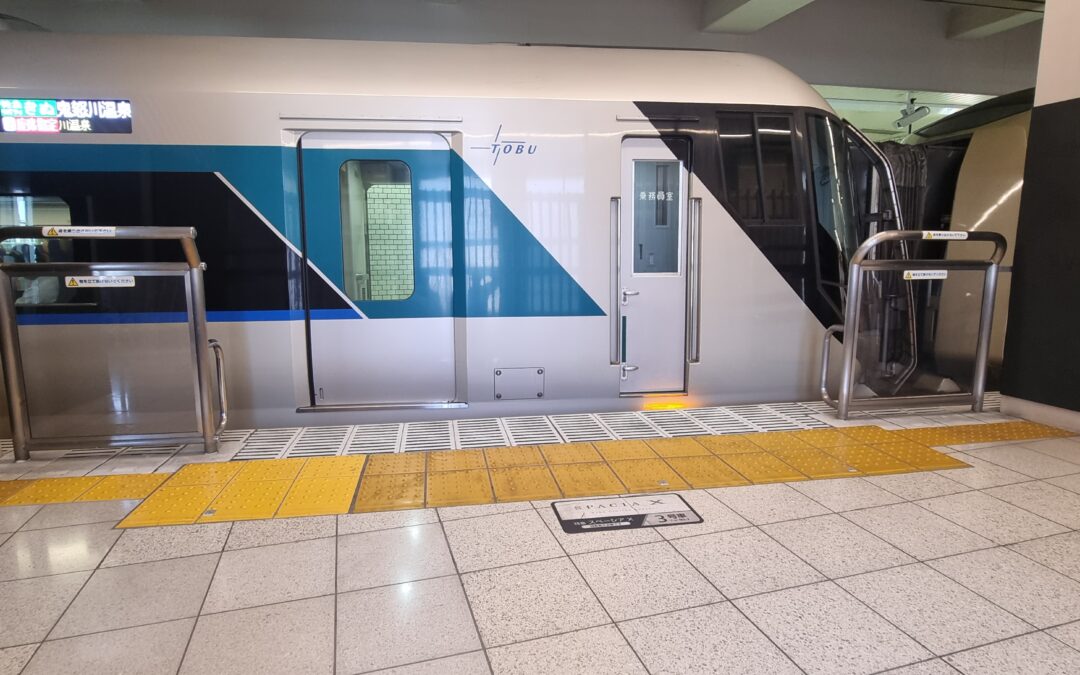
The Stop
Thirty Minutes Out of Nikko
We’d spent two days in Nikko and were riding back toward Tokyo, tired in the good way, watching the cedar hills flatten out into towns. About thirty minutes in, the train slowed and then stopped. Not at a platform. Just stopped, somewhere between places, with the fields sitting still outside the window.
At first nobody reacted much. Trains stop. But a few minutes passed, then ten, and the quality of the silence in the car started to change. Then an announcement came, and then the attendants began moving down the aisle drawing the curtains closed, one window at a time, unhurried, working from both ends of the car toward the middle. There had been a serious accident ahead of us. That was when we understood this was not a delay.
What Care Looks Like
The Curtains, and Everything After
I keep coming back to the curtains. Nobody on that train needed to see what was outside, and somebody had decided that before any of us thought to ask. It wasn’t procedure performed at us. It was someone thinking about what a hundred strangers were about to be exposed to and quietly making sure they weren’t. Small thing. It has stayed with me longer than almost anything else from the trip.
What followed was the same instinct, scaled up. The staff explained what they could, in Japanese and then in careful English for those of us who needed it, and when they didn’t have an answer they said so rather than inventing one. They came back through the cars again and again. Nobody was left to wonder what was happening for very long. When it became clear the train wasn’t moving, they began walking us off it — slowly, by car, helping with bags, helping older passengers down, counting heads. Then taxis. Somehow, taxis, for an entire trainload of people, out in the middle of nowhere, each one dispatched to the nearest station where we could transfer and carry on. No one shouted. No one was rushed. No one was left standing on the roadside wondering if they’d been forgotten.
Why It Stayed With Me
Japan Doesn’t Just Run on Time
People talk about Japanese efficiency like it’s a stopwatch thing — the trains to the second, the platform markings, the choreography of it all. And that’s real. But efficiency on a good day is easy to admire and easy to misread. What we saw that afternoon was the same system on its worst possible day, and it didn’t come apart. It bent toward people.
I’ve been in disruptions in other countries. I’ve been shouted at by staff who were themselves overwhelmed, left on platforms with no information, told to figure it out. I don’t say that to run anyone down; those people were usually working without support. The difference in Japan wasn’t that the staff were nicer individuals. It was that the entire operation seemed built on the assumption that when something terrible happens, the people in your care should feel looked after. Five people had died that day. We were strangers with luggage, and we were treated with a gentleness we hadn’t earned. I think about it often.
Please note that I have not received these products for free or at a discounted price in exchange for my opinion. There may be links that are affiliate links but at the time of posting this review, I have not received any monetary kickbacks.